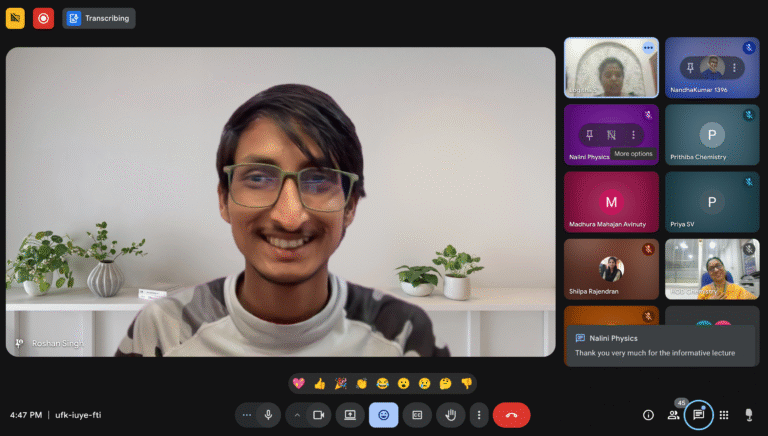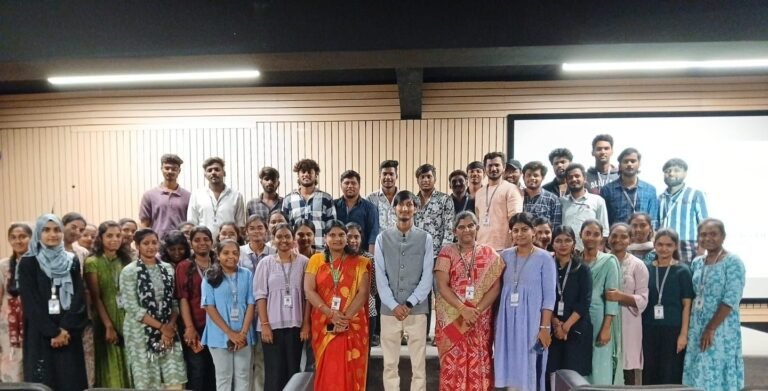

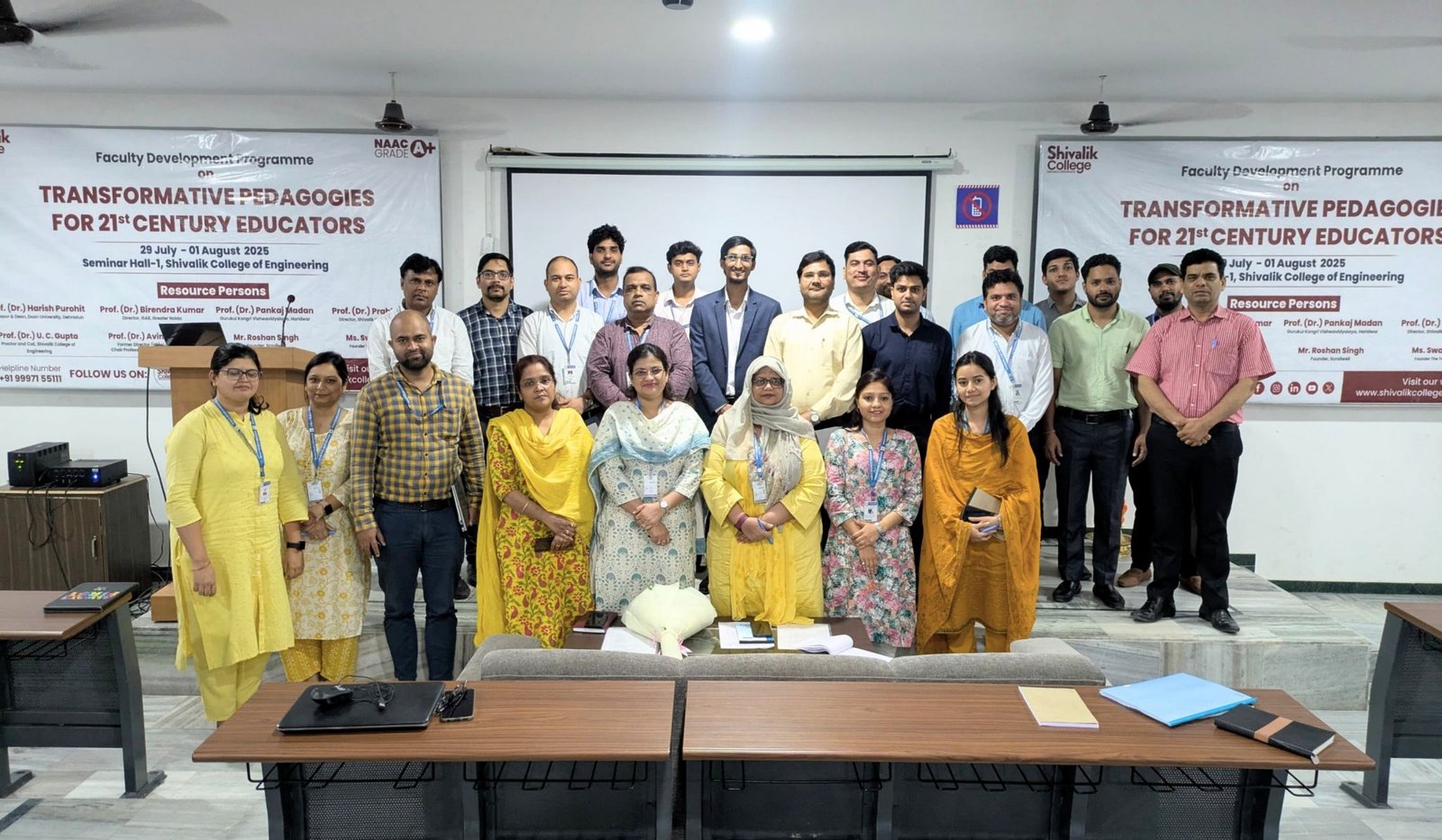
Shivalik College of Engineering (SCE), Dehradun, organized a thought-provoking online Faculty Development Session on the theme “Transformative Pedagogies for 21st Century Educators.” The session was aimed at supporting faculty members in understanding and adopting innovative teaching frameworks that are essential in today’s dynamic academic landscape.
The initiative reflected the growing recognition that educators need to go beyond traditional classroom.
Methods to embrace student-centered learning environments, digital integration, and critical thinking-oriented teaching models. Roshan Singh, known for his expertise in digital pedagogy and faculty development, led the session with a balanced blend of theory, practical insights, and interactive engagement.
Session Highlights
The session started by emphasizing the need for pedagogical transformation in higher education. Roshan highlighted how 21st-century learners, influenced by rapid technological advancements and information accessibility, require a different approach to learning. He encouraged educators to shift from being “knowledge transmitters” to becoming “learning facilitators.”
Key points of Transformative Pedagogies for 21st Century Educators discussed during the session included:
- Principles of Transformative Pedagogy: Understanding the shift from rote learning to inquiry-based and experiential learning.
- Innovative Teaching Frameworks: Exploring flipped classrooms, project-based learning, and blended learning models as strategies to enhance student engagement.
- Digital Integration: Demonstrations of digital tools that can make teaching more interactive, collaborative, and measurable.
- Inclusive Classrooms: Methods to address diverse student needs and promote equity in learning opportunities.
- Critical Thinking & Creativity: Encouraging educators to design assignments and discussions that foster problem-solving and innovation.
Roshan also shared examples of successful classroom practices where faculty had integrated technology-driven pedagogy to create more engaging learning experiences. Throughout the session, participants raised questions, shared personal challenges, and engaged in collaborative discussions, making the lecture highly interactive.
Impact & Takeaways
The session left participants with several actionable strategies to bring back to their classrooms. By the conclusion of the program, faculty members had:
- Developed a stronger understanding of transformative pedagogical approaches.
- Learned to apply learner-centric strategies that prioritize participation, collaboration, and critical reflection.
- Explored digital platforms and tools that could simplify lesson delivery and make learning more impactful.
- Built confidence in redesigning their teaching practices to meet the evolving expectations of students in a digital era.
- Recognized the importance of continuous professional development in staying relevant as educators.
Many participants appreciated the session’s practical orientation, noting that the strategies shared were not only innovative but also feasible for immediate implementation. The combination of academic theory and applied teaching practices gave faculty members a holistic view of how to transform their classrooms.
Acknowledgment
Roshan Singh extends his heartfelt gratitude to Shivalik College of Engineering (SCE), Dehradun, and Scrollwell for organizing this impactful faculty development initiative. He also commends the faculty members who participated with such enthusiasm, curiosity, and openness to change. Their active engagement made the session vibrant and reinforced the value of collective learning.
📩 For collaborations, training sessions, or speaking opportunities, please reach out to Roshan Singh through the contact section of this website.